Istanbul Travel Guide: Simple First-Time Tips You Actually Need
diciembre 4, 2025
play hiezcoinx2.x9: Revolutionizing the Future of Digital Rewards and Crypto Gaming
diciembre 16, 2025
France can feel like five trips in one. One day you are under the Eiffel Tower, the next day you are walking in a small stone village, and then you are by the sea on the French Riviera. There are famous cities, quiet countryside, wine regions, mountains, and coasts. With so many choices, it is easy to feel lost before you even book your ticket.
Quick France Travel Guide: 10 Fast Tips
If you only scan one part of this France travel guide, start here:
Best time to visit:
Spring (April–June) and autumn (September–early November) for mild weather and fewer crowds. Summer is great but busy and more expensive, especially on the coasts.
How long to stay:
5–7 days for a first taste (usually Paris plus one more region). 10–14 days if you want a more relaxed loop through two or three areas.
Where to start:
Paris is almost always the best starting point. From there, you can add the French Riviera, Normandy, the Loire Valley, Provence, or Alsace by train.
Money basics:
The currency is the euro. Cards are widely accepted, but keep some cash for small cafés, markets, and village shops.
Language:
Many people in cities speak basic English, but not everyone. A simple “bonjour”, “s’il vous plaît”, and “merci” makes a big difference in daily interactions.
Trains:
Use high-speed TGV trains for long distances (Paris–Nice, Paris–Lyon, Paris–Bordeaux) and regional trains for shorter hops. Book in advance for popular routes and dates.
Driving:
Driving is useful for the countryside (Loire Valley, Provence, Normandy). In big cities and Paris, you usually do not need a car and parking is difficult.
Safety:
France is generally safe, but pickpockets are common in busy areas and on metros in big cities. Keep your bag closed and phone in a safe place.
Food:
Eat like locals when you can: simple bakery breakfast, café lunches, set menus in bistros, and time for long dinners. Avoid restaurants with huge tourist menus right next to major landmarks.
Pace:
Do not try to “do all of France” in one trip. Focus on Paris and one or two regions. This France travel guide is about depth, not collecting cities.
Understanding France: City vs Countryside, North vs South
France is not just Paris. It helps to think of the country in a few big “moods”.
Big cities: Paris, Lyon, Marseille, Bordeaux, Nice
Busy streets, museums, shopping, big train stations, many food choices.Countryside and villages: Provence, Dordogne, Loire Valley, Burgundy
Slower pace, stone houses, markets, vineyards, more need for a car.North: Normandy, Brittany, Alsace
Cooler weather, green landscapes, coastal cliffs, half-timbered houses, World War II sites, Christmas markets in winter.South: French Riviera, Provence, Occitanie
More sun, beaches, bright colors, lavender fields in season, outdoor cafés.
A good France travel guide helps you pick which side fits you best for your first trip. Maybe you want a mix: a few days in a big city, then a few days in a quieter region.

The rolling lavender fields of Provence, especially around the stunning hilltop village of Gordes, offer one of the most iconic and beautiful views of France's countryside.
Key Regions and Cities for a First Trip
You cannot see all of France at once, but you can choose one or two regions to go with Paris. Here is a simple breakdown.
Paris
Paris is often the heart of any France travel guide.
What it feels like:
Classic Europe: grand boulevards, the Seine River, metro lines, small corner cafés, and famous sights everywhere.
Best for:
First-timers, city lovers, museum fans, food lovers, couples, and solo travelers.
Highlights in simple words:
Eiffel Tower and views over the city
Louvre Museum and nearby Tuileries Garden
Notre-Dame area and the islands in the Seine
Montmartre and Sacré-Cœur
Walks along the river and café terraces
French Riviera (Nice, Cannes, Antibes, Monaco nearby)
What it feels like:
Coastal town life with promenades, clear light, and a mix of beaches and hills. In summer, it is busy and glamorous; in winter, it is calmer but still mild.
Best for:
People who enjoy sea views, easy day trips by train, and a more relaxed pace after Paris.
Typical base:
Many visitors stay in Nice and do day trips to Cannes, Antibes, or Monaco.
Provence
What it feels like:
Villages on hills, markets, stone houses with shutters, olive trees, and sometimes lavender fields (in season). It feels warm, slow, and very “south of France”.
Best for:
Couples, slower travelers, people who enjoy small towns, markets, and countryside drives.
Note:
A car makes Provence much easier. Buses exist, but they are not always frequent between small villages.
Loire Valley
What it feels like:
Green countryside, rivers, and famous castles (châteaux). It is a good place for cycling, picnics, and wine tasting in a calm setting.
Best for:
Families, couples, and anyone who likes castles and gentle countryside.
Typical base:
Towns like Tours, Amboise, or Blois work well as hubs.
Normandy
What it feels like:
Coastal cliffs, farms, fishing towns, and important World War II history sites. The weather can be cooler and a bit rainy, but the landscapes are dramatic.
Best for:
History lovers, people who like coastal scenery, and those who want to see places like Mont-Saint-Michel or the D-Day beaches.
Alsace
What it feels like:
Colorful half-timbered houses, flowers, vineyards, and Christmas markets in winter. German and French influences mix in architecture and food.
Best for:
Winter trips with markets, or summer trips with wine trails and pretty villages. Strasbourg and Colmar are popular bases.
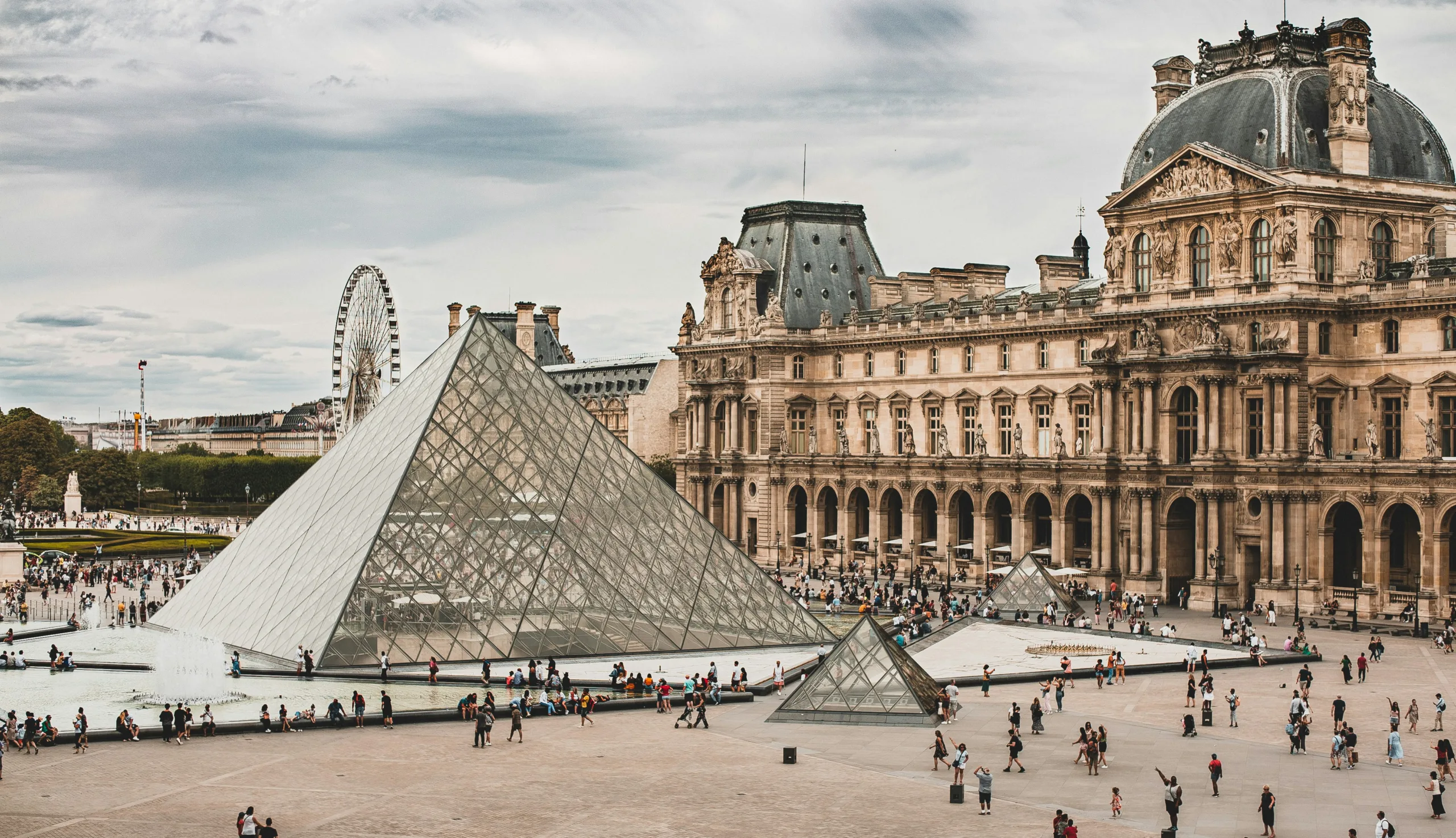
The main courtyard of the Louvre Museum, centered around its famous glass pyramid entrance, is always bustling with activity and remains one of the most essential stops for this France travel guide when visiting Paris.
What to See and Do: France Highlights by Theme
A France travel guide can easily become a long list, so here are simple groups you can think in.
Paris Highlights
Big sights:
Eiffel Tower – iconic view, especially at night when it sparkles.
Louvre – huge museum; plan a short route instead of trying to see everything.
Notre-Dame area – still a key point on the river; explore nearby streets and bridges.
Arc de Triomphe and the Champs-Élysées – classic city images.
Neighbourhoods to wander:
Montmartre: hilly, artistic, views from Sacré-Cœur, small squares and streets.
Le Marais: charming streets, shops, great for walking and eating.
Latin Quarter: student feel, narrow lanes, bookshops, and cafés.
Countryside and Villages
Provence:
Morning markets, village squares, olive groves, and in summer, sometimes lavender fields. Good for days of simple pleasure: coffee, walk, lunch, nap, sunset.
Loire Valley:
Visit 1–3 châteaux instead of ten. For example, you might pick Chambord (very large), Chenonceau (over the river), and one smaller, less crowded castle.
Alsace villages:
Places like Riquewihr or Eguisheim feel like storybook towns, especially around Christmas.
Where to Stay: Simple Area Choices
In this France travel guide, the focus is on areas, not hotel names. Where you sleep shapes each day.
Paris: Which Part of the City?
Central arrondissements (1st–7th, rough guide):
Close to big sights, the river, and main museums. Easy to walk to many places.
Good for: First-timers who want classic Paris views and short walks.
Things to know: Can be more expensive and feel a bit formal or business-like in some spots.
Le Marais (3rd–4th):
Trendy area with many shops, cafés, and narrow streets.
Good for: People who like a lively but not wild nightlife, and lots of food choices.
Latin Quarter / Saint-Germain (5th–6th):
Historic, with cafés, bookshops, universities, and nice streets.
Good for: Couples, culture lovers, and people who want a “classic” Paris feel.
Montmartre (18th):
Hilly, village feel with strong character.
Good for: Visitors who like charm and views and do not mind stairs and slopes.
How to Get Around France
Between Cities and Regions
TGV trains (high-speed):
These connect major cities like Paris, Lyon, Marseille, Nice, Bordeaux, and Strasbourg.
Good for: Fast, comfortable travel with no airport stress.
Tip: Book in advance for busy times to get better prices and ensure a seat.
Regional trains:
Connect smaller cities and towns, especially in regions like Normandy, Loire, and Alsace.
Good for: Medium-distance trips and day trips from bigger cities.
Tip: Check if you need to validate paper tickets in the machine on the platform before boarding.
Domestic flights:
Sometimes useful for very long jumps (for example, Paris to Nice or to Corsica), but trains often feel simpler when possible.
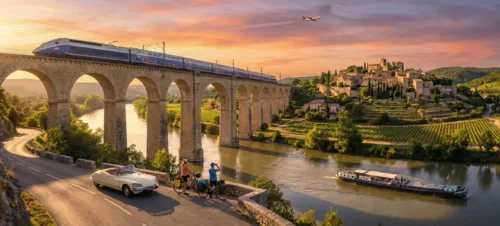
From high-speed TGV trains and scenic road trips to cycling routes and river cruises, getting around is part of the adventure. This panorama captures the diverse modes of transport available to explore the stunning regions featured in any comprehensive france travel guide.
Costs in Simple Terms (Very Rough 2025 Averages)
Accommodation (per night, per room)
Budget: €40–€80 → Simple guesthouse or 1–2★ hotel, often outside the very center.
Mid-range: €90–€180 → Decent 2–3★ hotel or apartment in a good area in most cities.
Higher-end / Paris & Riviera in season: €200+ → Central hotels, 4★+ options, or peak dates (July–August, Christmas, big events).
Food (per person)
Bakery breakfast: €3–€6 → Coffee + croissant or sandwich.
Simple lunch menu: €12–€20 → Fixed “menu du jour” in a café or bistro.
Sit-down dinner: €20–€40 → Main dish + drink in a normal bistro; more if you add starter, dessert, or several glasses of wine.
Street food / snacks: €5–€10 → Crêpes, sandwiches, takeaway items.
City transport
Single metro / bus / tram ride: around €2–€2.50 in big cities like Paris.
Day pass (depends on city/zone): about €8–€15 if you plan to ride several times in one day.
Trains between cities (2nd class, one way)
High-speed TGV (Paris ↔ big city like Lyon, Bordeaux, Nice): usually €25–€60+ if booked in advance; last-minute and peak times can be higher.
Regional trains: often cheaper than TGV, but slower and with fewer direct routes.
Season changes
Peak (July–August, Christmas, big events): accommodation and sometimes trains can be 20–40% more than off-season.
Low season (late winter, early spring): prices can drop 10–20%, but expect colder weather and calmer streets.
FAQ: France Travel Guide for First-Time Visitors
Do I need a French SIM or eSIM for internet in France?
You do not have to buy a French SIM or eSIM, but it often makes things easier and cheaper than roaming. Many travelers use a prepaid SIM/eSIM with data for maps, translation, and messages, and then use Wi-Fi in hotels and cafés when possible. If you are coming from the EU, your normal SIM may already work with “roam like at home”, but non-EU visitors usually save money with a local SIM or a travel eSIM.
How many days do I need in France for a first trip?
Five to seven days is a good start for a first trip to France. With this time, you can spend three or four days in Paris and then add one more region like the Loire Valley, the French Riviera, Normandy, Provence, or Alsace. If you have 10–14 days, you can move more slowly and include two or three regions.
What is the best time of year to visit France?
Spring (April to June) and autumn (September to early November) are often the best times to visit France. The weather is usually mild, and the crowds are smaller than in peak summer. Summer is lively and warm but busier and more expensive, especially near the sea, while winter can be cold but good for Christmas markets and quieter city breaks.
Is France safe for tourists?
France is generally safe for tourists, especially in well-known areas and during normal hours. The main issues are pickpockets in crowded places, small scams in tourist zones, and the occasional taxi overcharge. Keep your bag closed, hold your phone securely, and be careful in busy metro stations and around major landmarks.
Do I need to speak French to travel around France?
You do not need perfect French to travel in France, but knowing a few basic words helps a lot. Many people in cities and tourist areas speak at least some English, but staff in small shops or in the countryside may not. Simple phrases like “bonjour”, “merci”, and “s’il vous plaît” make interactions friendlier.
Do I need cash in France, or can I pay mostly by card?
You can pay by card in most hotels, restaurants, supermarkets, and larger shops in France. However, it is still useful to carry some cash for small bakeries, markets, village cafés, and public toilets. ATMs are widely available, and you do not need to carry large amounts of cash at once.
How should I move around France: train, car, or plane?
For most first-time trips, trains are the easiest way to move between major cities and regions in France. High-speed TGV trains are fast and comfortable, and regional trains cover shorter routes. A car is useful if you want to explore countryside areas like Provence, the Loire Valley, or parts of Normandy in depth. Planes are mainly useful for very long distances or for reaching islands like Corsica.